


Your dog will not stop scratching. You have tried a new shampoo, changed the bedding, even switched the food once. The itching keeps coming back.
Quick answer
Skin issues in Indian dogs usually fall into 4 patterns: allergies (food or environment), yeast and bacterial infections, parasite-driven irritation, and dry-skin or coat-quality issues. Most need a mix of vet care, the right bathing routine, and steady nutrition support. The skin reflects what is happening inside.
See your vet IMMEDIATELY if you notice:
- Open, weeping wounds or rapid hair loss in patches
- Severe swelling on the face, lips, or eyelids
- Bleeding skin or sudden skin darkening with thickening
- Lethargy, fever, or refusal to eat alongside skin signs
These need a same-day vet check, not a wait-and-watch.
The most common skin issues in Indian dogs
Skin problems are a very common reason Indian pet parents walk into a vet clinic. Itching, flaking, paw licking, ear scratching, hot spots. The patterns repeat across breeds and cities.
Here are the 4 you will almost certainly recognise:
1. Allergies (food and environmental)
Itchy paws, red belly, ear scratching, face rubbing on the carpet. The most common food triggers in dogs are beef, dairy, chicken, and wheat. Environmental triggers are dust mites, pollen, and grass.
The signs look identical. An elimination diet trial guided by your vet is the standard way to tell them apart.
2. Yeast and bacterial infections

That yeasty, slightly cheesy smell from the paws or ear flaps. Brown gunk between the toes. Greasy patches near the tail base.
Yeast lives on every dog. It overgrows when humidity climbs or when the skin barrier is weak.
3. Parasite-driven irritation
Flea bites, ticks, and mange mites are still extremely common across Indian cities. One flea bite can set off days of scratching in a sensitive dog. Check the base of the tail and behind the ears first.
4. Dry skin and poor coat quality
Dandruff that snowstorms onto your sofa. A coat that looks dull instead of glossy. Brittle hair that breaks when you brush.
Nutrition can be part of the story. Low essential fatty acids or low zinc can show up as dry skin and a dull coat.
What is actually causing the itching
Most dog parents blame fleas first, then food, then "maybe the shampoo". The real picture is usually layered.
Itching has 3 common drivers running in the background:
- A leaky skin barrier. When the outer skin layer loses moisture, irritants and microbes get in faster. The dog scratches. Scratching damages the barrier more.
- An overreactive immune system. The body treats harmless things, dust, pollen, a protein in the food, as threats. The result is inflammation and itch.
- A gut imbalance. The gut and the immune system are closely linked, and in some dogs an unsettled gut may play a part in how the skin reacts.
If your dog is scratching, licking paws, or has flaky skin, the answer is rarely in one shampoo bottle. It usually means finding the trigger with your vet, repairing the barrier from the outside and supporting the gut and nutrient supply from the inside.
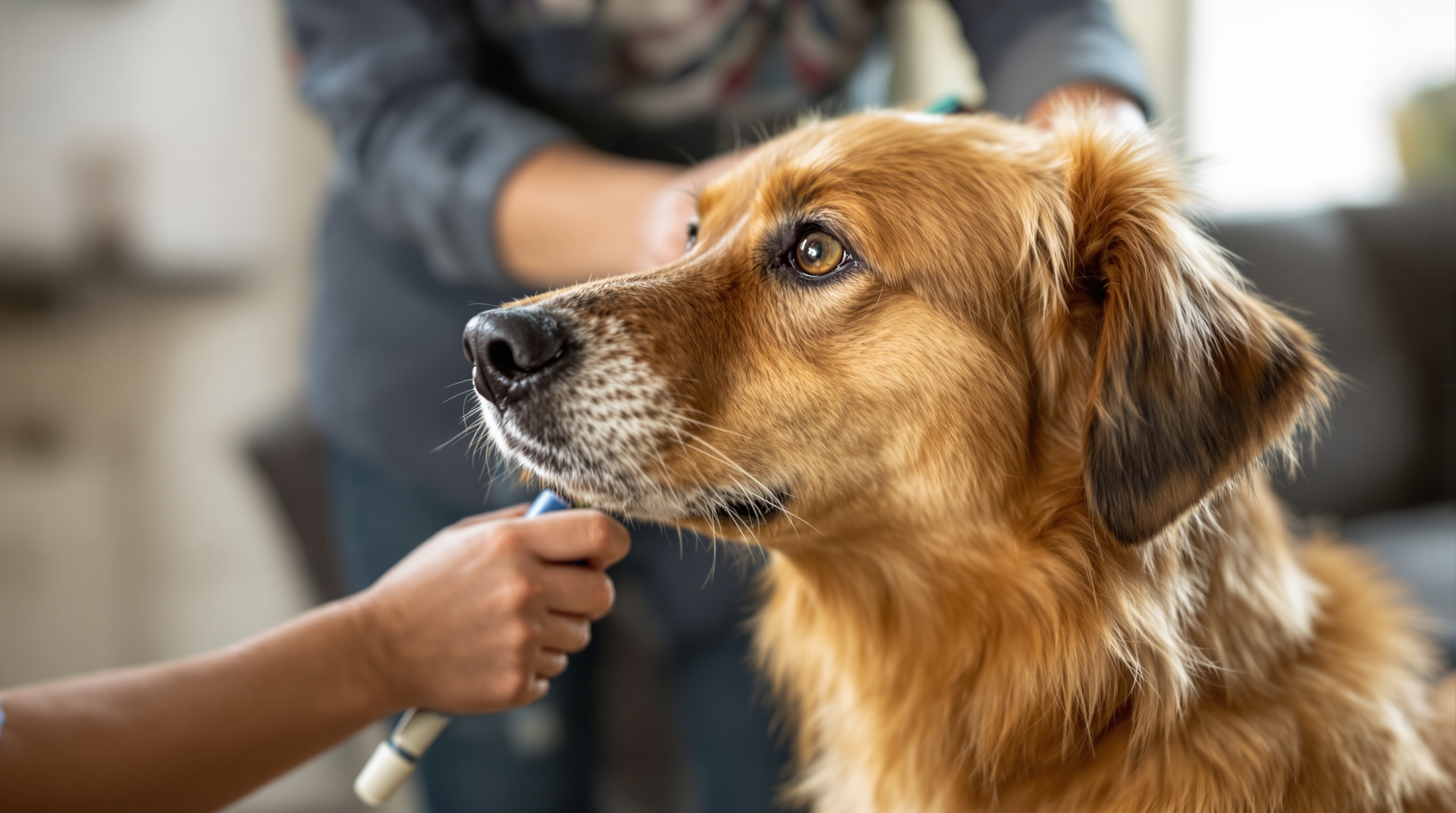
Why monsoon and winter make skin worse
Indian seasons stress dog skin in opposite ways.
During monsoon, humidity makes yeast infections between the toes much worse. Especially in Pugs, French Bulldogs, and Shih Tzus with skin folds. Paws stay damp after walks. Bedding holds moisture. Ear flaps trap warm, wet air.
Winter is the other extreme. Indoor heaters and cold dry air leave the skin parched. Flakes appear on the back and around the elbows. Coats look dull by January.
Then there are hot spots. They usually start when a dog scratches or licks an itchy spot so hard that the skin breaks open, so the real job is finding what is causing the itch.
Different season, different trigger.
What the research says about nutrition and skin
A 2004 Journal of Small Animal Practice study on essential fatty acids for canine skin conditions gave 29 dogs with atopic dermatitis flax oil, an omega-3 (EPA and DHA) preparation, or a placebo for 10 weeks. Clinical skin scores improved in both supplemented groups but not in the placebo group.
A 2020 Prostaglandins, leukotrienes, and essential fatty acids trial examining nutritional support for canine dermatologic health gave 24 dogs with poor-quality coats an omega-3 (EPA and DHA) supplement or a placebo for 90 days. Coat scores in the supplemented dogs improved from day 60, then went back to where they started by day 180, three months after the supplement stopped.
A 1994 Veterinary Dermatology crossover trial gave 16 itchy dogs (itch of unknown cause, atopy, or flea allergy) high-dose marine (fish) oil and corn oil for 6 weeks each. Compared with corn oil, the fish oil improved itching, hair loss, and coat quality.
For broader, vet-trusted nutrition guidance, see the WSAVA Global Nutrition Guidelines, the canonical small-animal vet-nutrition reference.
From K9 Vitality data:
In our survey of over 2,500 existing (repeat) K9 Vitality customers, 7 out of 10 reported noticing improvement within 30 days. Note: respondents were repeat customers, so pet parents who did not see results are underrepresented.
An honest note: skin work is slow work. Some dogs take longer to show change, and some do not respond to nutrition alone because the trigger is medical, not dietary. That is when the vet plan and the supplement work side by side.
What a daily Skin and Coat supplement actually does
The K9 Vitality Skin and Coat supplement is a powder, not a chew. You mix the daily amount into your dog's food. The formula is built around 17 active ingredients that target 3 things: the skin barrier, the inflammation response, and coat-building nutrients.
What that means in plain words:
- Essential fatty acids to support skin cell membranes and reduce reactivity
- Biotin and zinc to support new coat growth
- Plant-based antioxidants to help calm low-grade inflammation
- Skin-supporting minerals that everyday rice-and-chicken bowls often skip
Many parents pair Skin and Coat with our Pre+Probiotics for dogs with recurring itchy paws and ear scratching. The Pre+Probiotics supports the gut, which may be contributing to those signs in some dogs.
One Indian kitchen note. Haldi is everywhere in our homes and many parents ask about it. Raw kitchen turmeric is poorly absorbed by dogs and is not a substitute for a measured supplement. High-dose turmeric paste can cause stomach upset or interact with medications, and garlic, raw or cooked, can damage a dog's red blood cells, so never give it. Talk to your vet before giving any kitchen ingredient as a remedy.
When to see your vet
Nutrition supports skin. It does not replace a clinic visit when the signs cross a line. Book a vet appointment if you notice any of these:
- Itching that disrupts sleep or causes raw, broken skin
- Hair loss in defined patches, especially circular ones
- A strong, persistent odour from ears, paws, or skin folds
- Crusting, scabs, or open sores
- Sudden colour change in the skin, darkening or thickening
- Skin signs alongside vomiting, loose stools, or low energy
Your vet may suggest a skin scrape, ear cytology, or an elimination diet. Bring photos of the worst patches and a list of every food and treat your dog has had in the last 2 weeks. It saves time and helps the vet zero in faster.
Dosage by weight
Dosage by weight
| Dog's Weight | Daily Amount |
|---|---|
| Below 11 kg | Less than half a scoop |
| 11-26 kg | 1 scoop |
| 27-45 kg | 2 scoops |
| 46 kg and above | 3 scoops |
Mix into food daily. Start with half the recommended amount for the first week, then move to the full dose. Suitable for dogs 4 months and older. 90-day money-back guarantee. Do not start during active vomiting or diarrhoea, wait 24 to 48 hours symptom-free.
A quick comparison: shampoo vs nutrition vs vet care
| Approach | What it helps | What it does not fix |
|---|---|---|
| Medicated shampoo | Surface yeast, bacteria, calming flare-ups | Internal triggers, barrier nutrition |
| Daily nutrition support | Skin barrier, coat quality, reactivity | Active infections, parasites |
| Vet care | Diagnosis, prescription treatment, allergy plan | Day-to-day diet and routine gaps |
Most dogs need at least 2 of these working together, not just one.
Key takeaways
- Most Indian dog skin issues fall into 4 patterns: allergies, yeast, parasites, dry skin.
- The skin reflects the gut and the diet, not just shampoo and bathing.
- Give nutrition support 8 to 12 weeks before judging results.
- Monsoon worsens yeast in folds. Winter worsens dryness and dandruff.
- Skip raw turmeric, ACV, and internal coconut oil as DIY remedies.
Sources: Mueller RS et al., Journal of Small Animal Practice (2004), PubMed PMID 15206474, Journal of Small Animal Practice 2004, Effect of omega-3 fatty acids on canine atopic dermatitis. Combarros D et al., Prostaglandins, leukotrienes, and essential fatty acids (2020), PubMed PMID 32505998, Prostaglandins, leukotrienes, and essential fatty acids 2020, A prospective, randomized, double-blind, placebo-controlled evaluation of n-3 essential.... Logas D et al., Veterinary Dermatology (1994), PubMed PMID 34645070, Veterinary Dermatology 1994, Double-blinded Crossover Study with Marine Oil Supplementation Containing High-dose Eic.... WSAVA Global Nutrition Guidelines. Customer data from a K9 Vitality survey of over 2,500 existing (repeat) customers, as of March 2026. All customer reviews are verified via Judge.me.
If your dog has been scratching, flaking, or smelling more than usual, give a proper skin and coat plan 8 to 12 weeks. Not 7 days, not 2 weeks. Eight to twelve weeks with consistent feeding, vet care where needed, and a daily supplement that supports the skin barrier. Every pack comes with our 90-day money-back guarantee. Shipping is free on prepaid orders, and Cash on Delivery is available with a ₹100 COD fee.
Healthy skin starts from the inside.
Written by Aman Patial, Founder, K9 Vitality.
K9 Vitality, India's premium dog supplement brand trusted by 45,000+ Indian pet parents.
Dr. Jasleen Kaur, MVSc (Surgery & Radiology)
Dr. Jasleen Kaur is a veterinary surgeon and the founder of Allpets Clinic and Beyond, with over 10 years of experience in small animal and exotic pet care. She holds a Master’s in Surgery and Radiology, a diploma in Animal Welfare Law from NALSAR University, and an Executive MBA from ISB. Her work focuses on preventive healthcare, diagnostics, surgery, and overall pet wellness.
LinkedIn

