


Your dog seemed fine yesterday. This morning he walked past his bowl, and you noticed a tick behind his ear, and now you are on your phone at 11pm trying to figure out if this is something or nothing.
Quick answer
Common dog diseases in India include tick fever, parvovirus, kennel cough, skin and ear infections, dental disease, kidney disease, and gut issues like loose motions. Catching them early matters. Vaccination, tick prevention, dental care and watching daily water intake are the everyday basics, and daily gut support can help keep digestion steady.
See your vet IMMEDIATELY if you notice:
- Pale or white gums, nosebleeds, or dark cola-coloured urine
- Repeated vomiting, bloody diarrhoea, or a bloated tight belly
- Seizures, collapse, sudden weakness in the back legs
- Trouble breathing, blue-tinged tongue, non-stop coughing
- Refusing food and water for more than 24 hours
Tick fever and parvo can move from "a bit off" to critical in a single day in Indian conditions. Do not wait for the morning clinic.
The diseases Indian dogs actually get
Indian dogs face a slightly different mix than dogs in colder countries. Heat, humidity, monsoon mud, tick load, and street exposure shape what shows up at clinics in Bangalore, Pune, Mumbai, Delhi, Chennai.
Here is a short list of what vets see week after week.
1. Tick fever (ehrlichiosis and babesiosis)
This is the big one. Brown dog ticks are everywhere in India, and they carry blood parasites and bacteria that can hit any dog hard, German Shepherds especially. Sudden lethargy, off food, pale gums. Sometimes a fever your dog will not show until it is already high.
2. Parvovirus
Mostly a puppy disease. Unvaccinated or half-vaccinated puppies get hit. Bloody diarrhoea, vomiting, dehydration within hours. Can be fatal if missed. The vaccine works. Use it on schedule.

3. Kennel cough
Honking, dry cough that sounds like something is stuck in the throat. Spreads in boarding, parks, grooming salons. Usually mild in adult dogs, scary in puppies and seniors. The reassuring part: kennel cough is usually self-limiting and easily treatable, though the constant coughing can be stressful for your dog while it lasts. A vaccine exists too, worth asking your vet about if your dog boards often or meets a lot of dogs.
4. Skin allergies, fungal infections, and ear infections
A very common complaint. Itchy paws, red belly, ear shaking, smelly ears. Monsoon can make it worse. Indian humidity plus a moist ear plus food sensitivities is the perfect storm.
5. Dental disease
Tartar, bad breath, loose teeth. Many Indian pet parents never brush. By 4 to 5 years many dogs already show calculus and gum disease, which has been linked to kidney disease.
6. Kidney disease
The quiet one. Kidney trouble builds with almost no drama, which is why it is so often caught late. Most pet parents do not track how much water their dog drinks, so the earliest sign, drinking and peeing more than usual, slips by unnoticed. Untreated dental disease has also been linked to kidney disease. Watch the water bowl, and take dental cleaning and scaling seriously.
7. Gut issues, loose motions, IBD-style flares
A very common worry. Diet swings, stress, antibiotics, monsoon water. The gut takes the hit first.
Early signs most pet parents miss
Dogs hide illness. It is built into them. By the time the limp or the vomiting is obvious, the body has usually been compensating for days.
The signs most Indian pet parents miss are the boring ones. Not dramatic. Just slightly off.
- Slightly less water intake, or suddenly a lot more. Both matter. Both can flag kidney or hormone issues.
- One skipped meal that becomes two. Most healthy dogs do not skip meals. A picky day is fine. Two in a row is information.
- A duller coat, more dander. The coat is a window into the gut and skin. Sudden dullness is rarely random.
- Licking paws more than usual. Often allergy, sometimes pain.
- Head shaking, scratching one ear. Ear infection brewing. Catch it at week one, not week four.
- Soft stool that comes and goes. Not a one-off bad day. A pattern across 2 to 3 weeks.
- Bad breath that was not there last month. Often dental disease starting.
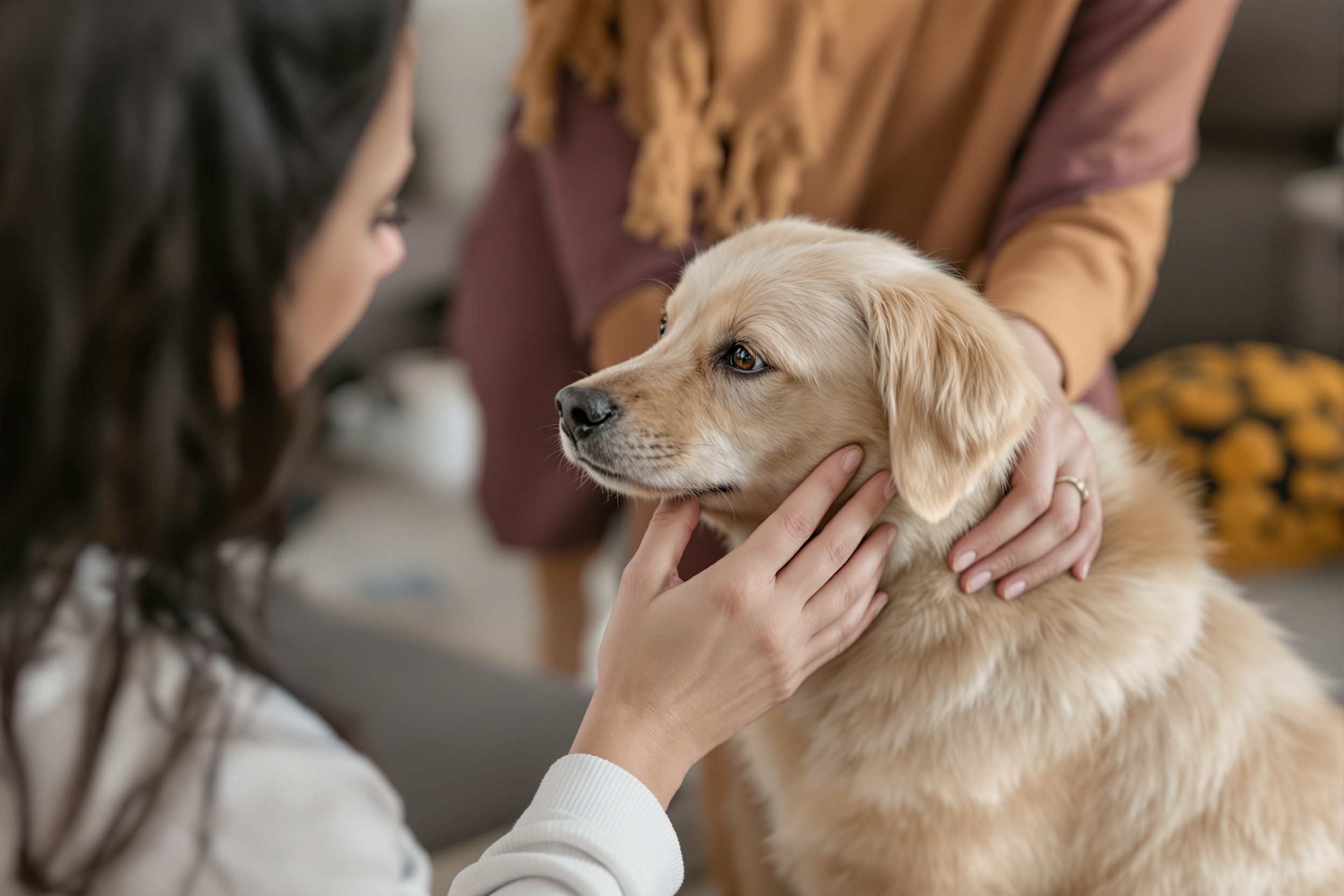
These are the patterns pet parents notice gradually over weeks. Each one alone is small. Three at once is your dog telling you something.
Prevention basics that actually work
Many common dog diseases in India are preventable. Not all. But many. The honest answer is that four boring habits do a lot of the work.
Vaccinate on time. The core 5-in-1 or 7-in-1 plus rabies, on the schedule your vet sets. Skipping boosters leaves puppies open to parvo and distemper, which still kill puppies in India.
Tick prevention every single month. Not "when I see a tick." Every month, year round. The tick load in India does not really stop, even in winter in most cities. Talk to your vet about a topical spot-on or an oral chewable that fits your dog.
Dental care, even a basic version. Brushing 3 times a week with a dog-safe paste. If you cannot brush, dental chews and a yearly scaling. For broader nutrition guidance, the WSAVA Global Nutrition Guidelines are the cleanest reference for what a healthy daily diet should cover.
A stable gut. This is the one most people skip. Loose motions and antibiotic recovery both involve the gut. More on this below.
One honest limit: prevention is not a guarantee. Even a perfectly vaccinated, tick-treated dog can fall sick. The point of prevention is to shift the odds and to make recovery faster when something does hit.
Where gut health fits in
Many Indian pet parents do not search "best probiotic for dogs." They search "my dog keeps licking his paws" or "dog loose motion home remedy." Those two problems can sometimes be linked.
A 2019 Journal of Veterinary Internal Medicine systematic review of probiotics for gut disease in dogs found only a very limited and possibly clinically unimportant effect for sudden tummy upsets. For long-running gut disease, diet remained the main treatment and probiotics added no clear benefit. Most of the studies were small. In plain words: a probiotic is a daily support, not a treatment and not an insurance policy.
A 2019 Frontiers in Immunology study on probiotics for canine gut health gave dogs of different ages a three-strain probiotic for 60 days. Dogs on the probiotic gained more weight, older dogs ate more, some immune markers rose and gut bacteria shifted toward helpful types, most strongly in elderly dogs. It measured markers, food intake and weight, not stools, itching or recovery after antibiotics.
This is not a cure for parvo, tick fever, or any serious disease. It is groundwork.
What a daily probiotic actually does
K9 Vitality Pre+Probiotics is a powder you mix into your dog's food daily. 12 strains of probiotics plus prebiotic fibre.
Phase one is roughly the first month, when some pet parents notice firmer stool and a calmer belly. Phase two is one to three months. This is when changes start to hold, not just appear. Phase three is three to six months and beyond, when skin and coat benefits can show and the dog just looks "settled."
Time lagta hai. Gut support takes weeks, not days. K9 Vitality Pre+Probiotics is built for that slow, real-world curve, not a 7-day fix.
"Rana, nearly 5 year golden retriever has been using the K9, Prebiotic supplement for a year now. There has been an improvement in his gut health and immunity! He is more active and does not fall sick often nowadays. Highly recommended for daily usage"
— Preetha, Golden Retriever parent, verified customer via Judge.me
One honest line. This does not work the same for every dog. Some dogs respond in weeks, some take months, and some never settle without parallel vet work for an underlying issue. The 90-day money-back guarantee exists for exactly that reason.
If you also need broader product options, the full range sits at K9 Vitality products.
A note on Indian kitchen remedies. Most Indian pet parents have haldi in the kitchen and reach for it the moment something looks off. The issue is not the ingredient. It is the dose and absorption in a dog's gut. Raw kitchen turmeric is poorly absorbed by dogs and is not a substitute for a measured supplement. High-dose turmeric paste can cause GI upset or interact with medications. Talk to your vet before giving any kitchen ingredient as a remedy. Curd and dahi are also not a fix for loose motions in dogs. Many dogs are lactose intolerant.
Dosage by weight
Dosage by weight
| Dog's Weight | Daily Amount |
|---|---|
| Below 11 kg | Less than half a scoop |
| 11-26 kg | 1 scoop |
| 27-45 kg | 2 scoops |
| 46 kg and above | 3 scoops |
Mix into food daily. Start with half the recommended amount for the first week, then move to the full dose. Suitable for dogs 4 months and older. Do not start during active vomiting or diarrhoea, wait 24 to 48 hours symptom-free. 90-day money back guarantee. Free shipping on prepaid orders. COD available for ₹100.
When to see your vet
Same-day vet visit, no waiting:
- Pale gums, nosebleeds, dark urine (tick fever signs)
- Bloody diarrhoea or vomiting more than twice in a few hours
- Tight bloated belly, especially in deep-chested breeds
- Seizures, sudden weakness, collapse
- Trouble breathing, non-stop coughing, blue tongue
- Not eating or drinking for more than 24 hours
- Any open wound that will not stop bleeding
Within 48 to 72 hours:
- Soft stool for more than 2 days
- Persistent itching, redness, or hair loss spreading
- Ear shaking with a smell or discharge
- Limping that does not resolve with rest
- Sudden weight loss or weight gain
When in doubt, a phone call to your vet costs nothing. Indian conditions do not give dogs the same margin a cooler climate does. Tick fever and parvo punish delay.
Key takeaways
- Tick fever, parvo, kennel cough, skin and ear infections, dental disease, kidney disease, and gut issues are common diseases in Indian dogs.
- Early signs are usually boring: skipped meal, duller coat, paw licking, soft stool that comes and goes.
- Vaccines, monthly tick prevention, dental care, and a stable gut are the everyday basics.
- A daily probiotic supports gut and immune balance, but is not a substitute for vet care.
- Same-day vet for pale gums, bloody stool, seizures, bloated belly, or trouble breathing.
FAQs
The most common questions we get from Indian pet parents are answered in the FAQ section below this article.
Sources: Xu H, et al. Oral Administration of Compound Probiotics Improved Canine Feed Intake, Weight Gain, Immunity and Intestinal Microbiota. Frontiers in Immunology, 2019. PMID 31001271. Jensen AP, Bjørnvad CR. Clinical effect of probiotics in prevention or treatment of gastrointestinal disease in dogs: A systematic review. Journal of Veterinary Internal Medicine, 2019. PMID 31313372. WSAVA Global Nutrition Guidelines, World Small Animal Veterinary Association. All customer reviews are verified via Judge.me.
If your dog has been showing small off-pattern signs, do not wait for the dramatic version of the problem. Book a vet visit. Sort vaccines and tick prevention. And give the gut a daily floor to stand on. If you try K9 Vitality Pre+Probiotics and do not see a difference in 90 days, our 90-day money-back guarantee has you covered.
Small signs matter. Listen to your dog.
Written by Aman Patial, Founder, K9 Vitality.
Dr. Jasleen Kaur, MVSc (Surgery & Radiology)
Dr. Jasleen Kaur is a veterinary surgeon and the founder of Allpets Clinic and Beyond, with over 10 years of experience in small animal and exotic pet care. She holds a Master’s in Surgery and Radiology, a diploma in Animal Welfare Law from NALSAR University, and an Executive MBA from ISB. Her work focuses on preventive healthcare, diagnostics, surgery, and overall pet wellness.
LinkedIn

