


Your Lab used to beat you to the front door. Now he watches you put on your shoes, thinks about it, and stays on the mat.
Quick answer
Hip problems in dogs usually start as quiet stiffness, a slower rise from the floor, a small hop in the back legs, less interest in stairs. Common in Labs, Goldens, and German Shepherds. Controlled weight, short daily walks and a weight-based joint supplement can help, and supplements take weeks, not days.
See your vet IMMEDIATELY if you notice:
- Sudden refusal to put weight on a back leg
- Yelping in pain when touched near the hip
- A back leg that looks dislocated or stuck at a strange angle
- Collapse, dragging a paw, or loss of bladder control
These are not slow-onset hip issues. They are emergencies and need a vet today.
The early signs most pet parents miss
The first signs of hip trouble are quiet. Your dog still eats. Still wags. Still loves you. That is exactly why this is missed for weeks, sometimes months.
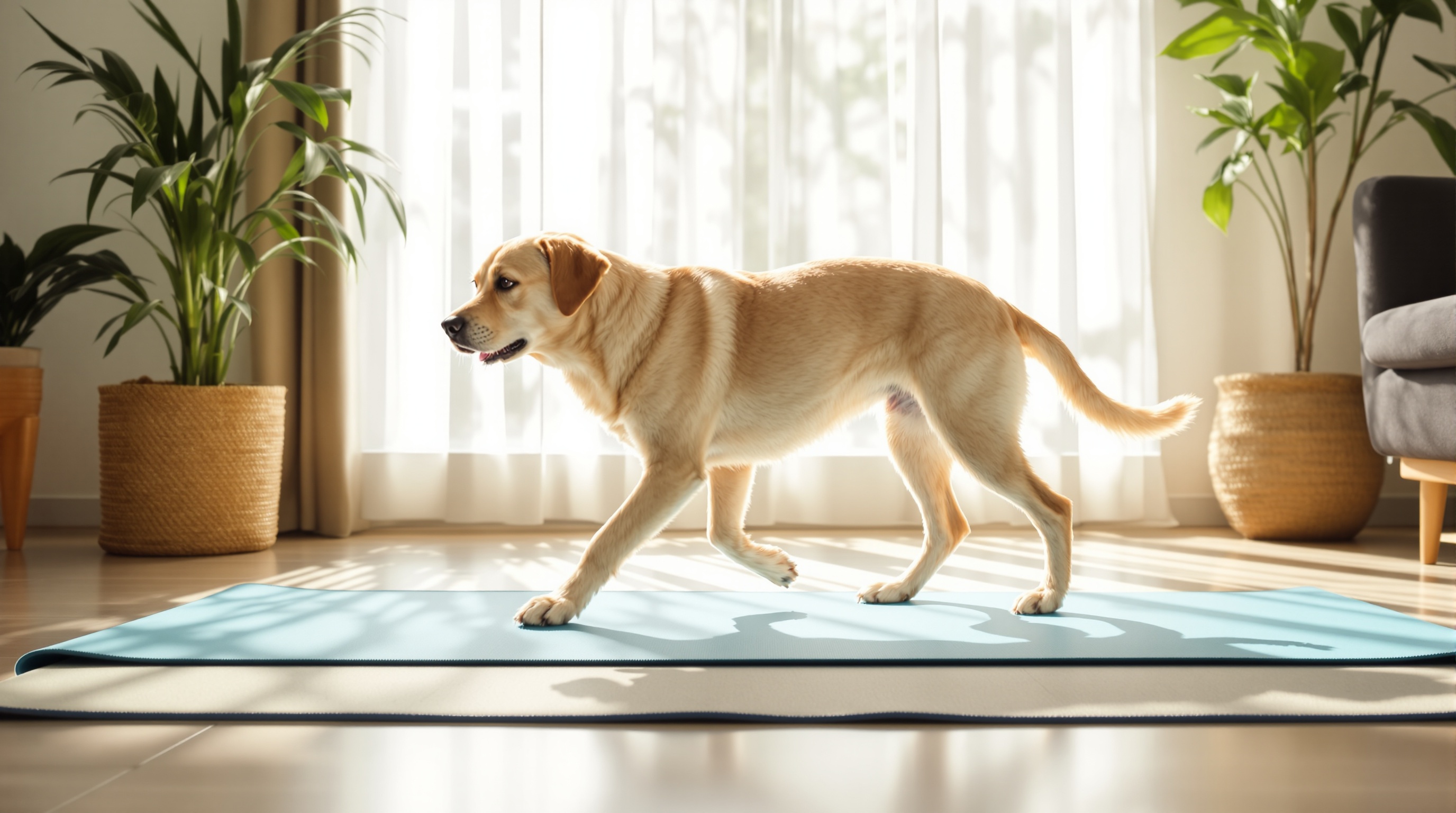
Watch for the morning rise. A healthy young dog springs up. A dog with hip discomfort thinks about it, shifts weight to the front legs, and gets up slowly. The second clue is the "bunny hop", both back legs moving together while running, instead of alternating like a normal gait.
Other early signs:
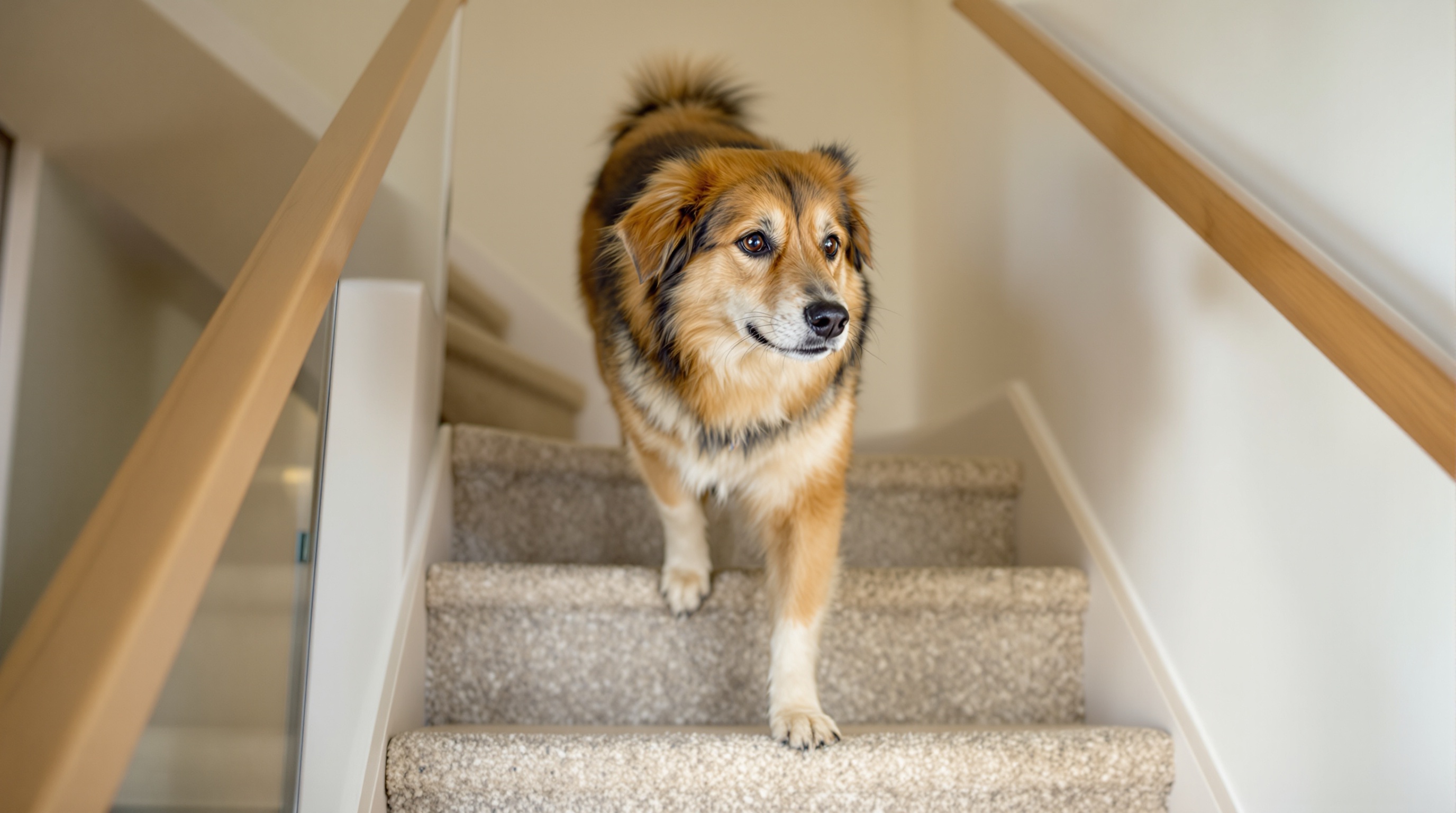
- Hesitating at the bottom of stairs, or refusing the last two
- Not jumping onto the sofa or into the car like before
- Sitting in a sideways "lazy" position with one hip flopped out
- A narrow back-leg stance, paws closer together than the shoulders
- Less interest in long evening walks, more sniffing breaks
None of these on their own mean hip dysplasia. Together, they are a pattern worth taking to your vet.

What actually causes hip problems in dogs
Most hip problems in Indian dogs trace back to one of three things: genetics, weight, or wear. Often all three at once.
Genetics and breed
Labradors and Golden Retrievers are the biggest chunk of pet parents asking us about hip issues. Both breeds are genetically loaded for hip dysplasia, where the ball and socket of the hip do not fit smoothly. German Shepherds, Rottweilers and Saint Bernards carry similar risk. Inbreeding and careless backyard breeding make this worse. When puppies come from parents who were never screened for hip health, the odds stack against them before their first birthday. If you are buying a pup, ask about the parents' hips, not just the breed. Smaller breeds are not immune, but the odds drop sharply.
Weight
This is the one variable you control. An overweight dog puts extra load on every step. Bigger dogs need joint support more, and the heavier they get, the faster the cartilage wears. If your Lab is 5 kilos over his ideal weight, his hips carry that extra load every day, for years.
Wear and tear
Years of jumping off beds, slippery tile floors, hard tug-of-war, and weekend zoomies all add up.
Age plays a role too, but onset varies a lot by individual. Some Labs show stiffness early, some stay athletic late into life. Other factors, weight, activity, breeding, climate, all stack with age.
What the research says actually helps
This is where pet parents get lost. There is a lot of noise online. Here is what the actual veterinary literature points to.
A 2003 Veterinary Record trial of a turmeric extract (P54FP) in dogs with osteoarthritis found no difference from placebo on the objective force-plate test over 8 weeks. Vets' overall assessment favoured the extract, but owners' assessment just missed statistical significance.
A 2007 Veterinary Journal trial of glucosamine and chondroitin in dogs with hip or elbow osteoarthritis reported improvement in vets' scores for pain and weight-bearing by day 70. Not day 7. Seventy days. The effect also started more slowly than with carprofen, the painkiller it was compared against. The change is slow and steady, not overnight.
A 2017 Open Veterinary Journal review of glucosamine and chondroitin for dogs with osteoarthritis found the evidence limited and conflicting, with few well-designed studies, even though vets commonly recommend them. In plain words: the proof is still thin.
A 2016 Veterinary medicine (Auckland, N.Z.) trial of eggshell membrane (a branded form, NEM) in dogs with joint problems found joint function and pain scores improved versus placebo at 1 week. At 6 weeks the main function score fell just short of significance, while vet-scored pain and owner-rated quality of life were significantly better.
A 2023 International Journal of Molecular Sciences review of turmeric and curcumin in humans and dogs describes the anti-inflammatory and antioxidant effects reported in earlier research, along with their drawbacks. It summarises other work; it is not a trial.
For broader nutrition context, the WSAVA Global Nutrition Guidelines are the standard small-animal reference vets use worldwide.
From K9 Vitality data:
In our survey of over 2,500 existing (repeat) customers, 7 out of 10 pet parents noticed improvement within 30 days. Note: respondents were repeat customers, so pet parents who did not see results are underrepresented.
Honest limit: joint supplements do not work for every dog. Some need the full 3 months to see anything. Some see very little and switch paths with the vet. That is why our 90-day money-back guarantee exists, the timeline is real, but so is the option to walk away.
What a daily Hip and Joint scoop actually does
Our K9 Vitality Hip and Joint is a powder with 18 active ingredients, mixed into food daily based on your dog's weight. It is not a chew. It is not a one-ingredient pill.

The idea is layered. Foundational joint structure needs certain ingredients. Bone tissue needs different ones. Comfort and inflammation support needs another set. The formula covers all three so you are not stacking three different bottles.
Inside, you get glucosamine and chondroitin for cartilage support, MSM for joint comfort, hydrolyzed Type II collagen peptide for connective tissue, eggshell membrane, green-lipped mussel, omega-3 sources, turmeric (Curcuma longa) with black pepper for absorption, and a few mineral and herbal supports that round it out. Most Indian pet parents have haldi in their kitchen already. The issue is not the ingredient. It is the dose and absorption, which is why a measured supplement form matters. Raw kitchen turmeric is poorly absorbed by dogs and is not a substitute, and high-dose turmeric paste can cause GI upset or interact with medications, so talk to your vet first.
Here is the rough timeline we suggest planning around:
- Weeks 0 to 4: Not much visible.
- Weeks 4 to 8: First small wins. Easier rise from the floor. A little more spring on walks.
- Weeks 8 to 12: The stretch where a visible difference is more likely. Stairs may feel less scary, and sofa jumps may come back.
- Month 3 onward: Daily maintenance, the routine becomes part of their life.
"It's helping my ageing golden retriever to move around and climb stairs. It was recommended to me by my brother because he too saw a big difference in his doggy. So I hope my review helps someone who is contemplating spending money on this product. Guys, it actually works !"
Namrata G, Golden Retriever parent, verified customer via Judge.me
If your dog has gut sensitivity or itchy skin alongside the stiffness, pairing with K9 Vitality Pre+Probiotics is something many of our long-term customers do. Always talk to your vet before stacking supplements.
Dosage by weight
Dosage by weight
| Dog's Weight | Daily Amount |
|---|---|
| Below 11 kg | Less than half a scoop |
| 11-26 kg | 1 scoop |
| 27-45 kg | 2 scoops |
| 46 kg and above | 3 scoops |
Mix into food daily. Start with half the recommended amount for the first week, then move to the full dose. Suitable for dogs 4 months and older. 90-day money-back guarantee.
When to see your vet
A supplement is for slow, ongoing stiffness. It is not for emergencies. See your vet the same day if you notice:
- Sudden refusal to bear weight on a back leg
- Yelping when the hip area is touched
- A leg held at an unnatural angle
- Dragging a paw, collapse, or loss of bladder control
- Stiffness that arrived overnight, not gradually
Even for slow-onset issues, an initial vet exam matters. X-rays and an orthopedic check tell you what you are dealing with. The supplement supports the long road. The diagnosis comes from a vet.
Frequently asked questions
See the FAQ section below for quick answers on early signs, breeds, timelines, kitchen remedies, long-term safety, and when to skip the supplement and go straight to the clinic.
Key takeaways
- Early signs are quiet: slow rises, bunny-hop running, skipped stairs.
- Labs, Goldens and GSDs are at higher risk.
- Joint supplements take weeks, not days, and do not work for every dog.
- Weight control and short daily walks matter as much as any scoop.
- Sudden pain, yelping, or limping needs a vet today, not a supplement.
Sources: Innes JF et al., Veterinary Record 2003 (PMID 12723628). McCarthy G et al., Veterinary Journal 2007 (PMID 16647870). Bhathal A et al., Open Veterinary Journal 2017 (PMID 28331832). Ruff KJ et al., Veterinary medicine (Auckland, N.Z.) 2016 (PMID 30050844). Kępińska-Pacelik J, Biel W, International Journal of Molecular Sciences 2023 (PMID 37834009). WSAVA Global Nutrition Guidelines, wsava.org. Customer data from our survey of over 2,500 existing (repeat) customers. All customer reviews are verified via Judge.me.
If your dog has been slow to get up, give a joint supplement 8 to 12 weeks. Not 7 days, not 2 weeks. Eight to twelve weeks. If you do not see a difference by then, our 90-day money-back guarantee has you covered. Free shipping on prepaid orders. COD available for ₹100.
Movement is health. Keep them moving.
Written by Aman Patial, Founder, K9 Vitality.
K9 Vitality, India's premium dog supplement brand trusted by 45,000+ Indian pet parents.
Dr. Jasleen Kaur, MVSc (Surgery & Radiology)
Dr. Jasleen Kaur is a veterinary surgeon and the founder of Allpets Clinic and Beyond, with over 10 years of experience in small animal and exotic pet care. She holds a Master’s in Surgery and Radiology, a diploma in Animal Welfare Law from NALSAR University, and an Executive MBA from ISB. Her work focuses on preventive healthcare, diagnostics, surgery, and overall pet wellness.
LinkedIn

