


You bent down to scratch his belly and felt the bumps before you saw them. Pink, angry, and clearly itchy, because he started chewing his paw the second you stopped.
Quick answer
Common causes of dog rashes in India include humidity, fleas, food sensitivities, and contact with grass and shampoos. Mild rashes often settle once the trigger is removed. Skin-support nutrition with omega-3s takes weeks, not days. See your vet for open sores, swelling, or fever.
See your vet IMMEDIATELY if you notice:
- Sudden swelling of the face, muzzle, or eyelids
- Hives spreading across the body within minutes
- Open, bleeding, or pus-filled sores
- Fever, lethargy, refusal to eat, or vomiting alongside the rash
- Difficulty breathing or collapse
These can signal a severe allergic reaction or skin infection that needs same-day care.
Why Indian dogs get rashes more often than you think
India is hard on dog skin. Long humid months, dust, pollen during festival season, mosquitoes, fleas that never fully die off in many cities, and tap water that varies in hardness from one neighbourhood to the next.
The skin barrier is the outer layer that locks moisture in and keeps allergens out. When it is weakened by damp, friction, or poor nutrition, even harmless things start triggering reactions. A walk on monsoon-wet grass becomes a paw rash. A change of shampoo becomes a belly rash. A new treat becomes a chin rash.
The honest part most articles skip: rashes are rarely about one villain. It is usually the skin barrier giving up because three small things stacked together.
The 5 rash types Indian pet parents see most

Most rashes that walk into Indian clinics fall into a few buckets. Knowing which one you are looking at changes what you do next.
1. Hot, damp belly rash (intertrigo and yeast)
Pink to red patches in the belly, armpits, groin, or face folds. Smells slightly sour or like stale popcorn when yeast joins in. Common in Pugs, French Bulldogs, Labradors, and any dog that spent an hour rolling in damp grass.
2. Flea allergy dermatitis
Tiny scabs along the lower back, near the tail base, and inner thighs. One flea bite can set off an itch storm in a sensitive dog. Very common in Indian summers and post-monsoon.
3. Contact rash
Sudden redness on the belly or paws after a walk, a new floor cleaner, a new shampoo, or grass spray in society gardens.
4. Food sensitivity rash
Slow-building itch around the ears, paws, and face. Constant licking often leaves raw lesions on the paws, and irritation around the anal area can happen too. Sometimes pairs with loose stool or soft poop. Protein is the biggest culprit in food allergies, and in Indian diets that usually means chicken or dairy add-ons.
5. Atopic flare (environmental allergy)
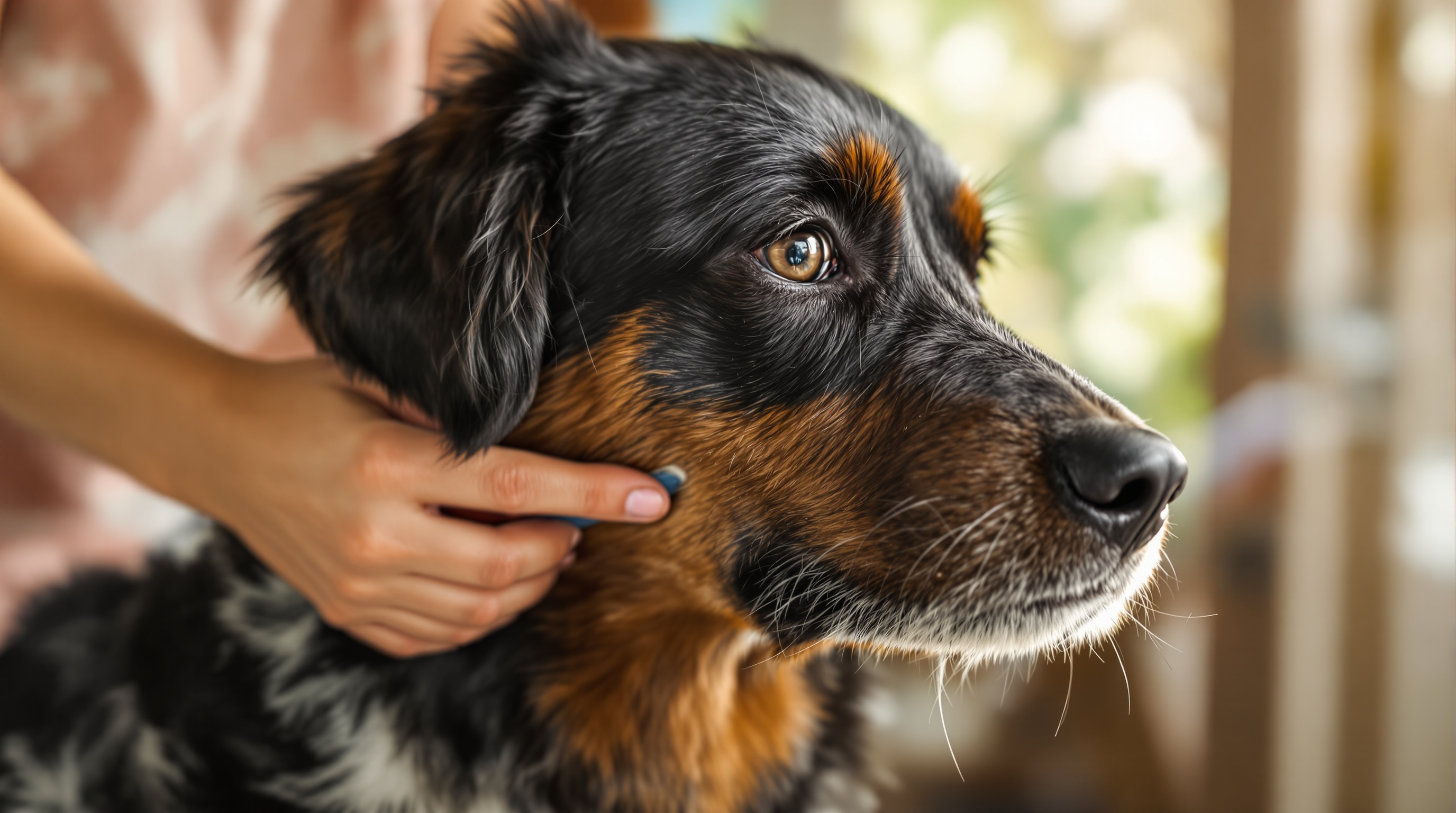
Often seasonal, comes and goes with pollen, dust, or humidity. Paws get red and licked raw. Ears flare repeatedly. Labradors and Goldens are over-represented here. One thing vets want pet parents to understand: atopy is usually a lifelong condition. It needs constant, ongoing management, and the realistic goal is longer gaps between flares, not a one-time fix.
Skin barrier and fats:
A 2004 Journal of Small Animal Practice study on essential fatty acids for canine skin conditions found that dogs with atopic dermatitis given flax oil or an omega-3 (EPA and DHA) preparation for 10 weeks improved in clinical skin scores, while dogs on a placebo did not. In plain words: the right fats can make a difference for allergy-prone skin.
Safe home care that will not make it worse
The instinct is to put something on the rash. Coconut oil, haldi paste, the antiseptic from your own bathroom shelf. Most of these make things worse, not better.
Here is what is actually safe to do at home while you arrange a vet visit.
Do this
- Rinse the area with plain lukewarm water. No soap, no shampoo, no antiseptic.
- Pat dry with a clean cotton towel. Damp skin keeps the rash alive.
- Check between toes and inside ear flaps. These hide moisture.
- Put an e-collar on if licking is constant. Saliva makes rashes spread.
- If you suspect food, do not fall back on boiled chicken, chicken is one of the most common triggers. Ask your vet about a hydrolysed protein diet or a novel protein, one your dog has never eaten before.
- Vacuum bedding and wash it in hot water if fleas are even a maybe.
Do not do this
- No haldi paste on the skin. Raw kitchen turmeric is poorly absorbed by dogs and is not a substitute for a measured supplement. High-dose turmeric paste can cause GI upset or interact with medications. Talk to your vet before giving any kitchen ingredient as a remedy.
- No coconut oil internally or as a slather. Dogs lick it off, and it can upset the stomach.
- No apple cider vinegar rinses. It stings broken skin.
- No curd or dahi for "cooling". Many dogs do not digest dairy well.
- No human steroid creams. Dogs lick them off, and they can upset the stomach.
For broader nutritional context on skin and overall health, the WSAVA Global Nutrition Guidelines are a widely used small-animal vet reference. Worth a glance if you want to understand what a balanced bowl actually looks like.
What a daily Skin and Coat powder actually does
Skin support is not only about what goes on the skin. Part of it is built from inside the bowl. The outer layer you see is the last thing to change, which is why nutrition takes weeks to show.
K9 Vitality Skin and Coat is a powder you mix into food daily. It carries 17 actives, including omega-3 fatty acids from fish oil and flaxseed, biotin, zinc, vitamin E, and turmeric. The job is to support the skin barrier so it holds moisture, reacts less, and grows back a denser coat over time.
A 2020 Prostaglandins, leukotrienes, and essential fatty acids trial of an omega-3 supplement in dogs with poor-quality coats found coat scores improved from day 60 of daily EPA and DHA, then went back to baseline by day 180, after the supplement stopped at day 90. Translating to weeks at home: coat change is slow, and it faded once the supplement stopped.
A 1994 Veterinary Dermatology crossover trial of high-dose fish (marine) oil in itchy dogs found that 6 weeks of marine oil improved itching, hair loss and coat quality compared with corn oil. Said differently: the right fats, given daily for a few weeks, can ease itch in some dogs.
If your dog is on a senior or sensitive-stomach plan, our K9 Vitality Skin and Coat works alongside food. For dogs whose rashes start with the gut (loose stool plus itchy paws is a common combination), pet parents often pair it with Pre+Probiotics because gut and skin health may be linked.
Honest limit: skin nutrition is slow. Changes in licking and coat feel take weeks, and coat density takes months. If your dog has a fast-spreading rash, the supplement is a supporting cast member, not the lead. Vet care comes first.
Dosage by weight
| Dog's Weight | Daily Amount |
|---|---|
| Below 11 kg | Less than half a scoop |
| 11-26 kg | 1 scoop |
| 27-45 kg | 2 scoops |
| 46 kg and above | 3 scoops |
Mix into food daily. Start with half the recommended amount for the first week, then move to the full dose. Suitable for dogs 4 months and older. 90-day money back guarantee.
When to see your vet
Home care covers a lot of mild rashes. It does not replace a vet exam for these signs.
- Rash spreading visibly over 24 to 48 hours
- Open sores, oozing, or strong smell from the skin
- Hair loss in patches, especially round or coin-shaped
- Constant licking or chewing that breaks skin
- Repeat ear infections alongside skin flares
- Loose stool or vomiting paired with the rash
- Fever, refusal to eat, or unusual quietness
- Any swelling of the face, eyelids, or muzzle (same-day vet)
Comparing the 5 rash types at a glance
| Rash type | Where it shows up | Common Indian trigger |
|---|---|---|
| Damp belly / yeast | Belly, armpits, folds | Monsoon humidity, wet coat |
| Flea allergy | Lower back, tail base | Year-round fleas in most cities |
| Contact rash | Belly, paws | Floor cleaners, garden sprays |
| Food sensitivity | Ears, paws, face | Chicken, dairy add-ons |
| Atopic flare | Paws, ears, belly | Pollen, dust, seasonal shifts |
Key takeaways
- Indian humidity, fleas, food, and contact triggers are common causes of the rashes you will see.
- Rinse with plain water, pat dry, skip haldi, coconut oil, and ACV at home.
- Skin-support nutrition takes weeks to show, and coat changes take months.
- See your vet same day for swelling, open sores, fever, or fast-spreading rash.
- Skin and Coat powder is supportive nutrition, not a treatment, and works with vet care.
Sources: PubMed PMID 15206474, Journal of Small Animal Practice 2004, essential fatty acids for canine skin conditions. PubMed PMID 32505998, Prostaglandins, Leukotrienes and Essential Fatty Acids 2020, omega-3 supplement in dogs with poor-quality coats. PubMed PMID 34645070, Veterinary Dermatology 1994, high-dose marine oil for itchy skin disease in dogs. WSAVA Global Nutrition Guidelines. All customer reviews are verified via Judge.me.
If your dog is itching tonight, do the simple things first. Rinse with plain water, pat dry, get the e-collar on, and book the vet for tomorrow. If you want to support the skin barrier from inside while you sort the trigger, give Skin and Coat a steady 8 weeks. Our 90-day money back guarantee has you covered if you do not see a difference.
Healthy skin starts from the inside.
Written by Aman Patial, Founder, K9 Vitality.
K9 Vitality, India's premium dog supplement brand trusted by 45,000+ Indian pet parents.
Dr. Jasleen Kaur, MVSc (Surgery & Radiology)
Dr. Jasleen Kaur is a veterinary surgeon and the founder of Allpets Clinic and Beyond, with over 10 years of experience in small animal and exotic pet care. She holds a Master’s in Surgery and Radiology, a diploma in Animal Welfare Law from NALSAR University, and an Executive MBA from ISB. Her work focuses on preventive healthcare, diagnostics, surgery, and overall pet wellness.
LinkedIn

