


You woke up to a puddle near the door. Your dog looks at you with the same guilty face he always makes, but this is the third time since last night and you are not sure whether to panic or wait it out.
Quick answer
For mild dog loose motions, rest the gut for 12 hours, keep fresh water available, then feed small meals of plain boiled white rice with a little boiled boneless chicken for 2 to 3 days. See your vet the same day if there is blood, vomiting, weakness, or if your puppy is under 4 months.
See your vet IMMEDIATELY if you notice:
- Blood in the stool, or black tarry poop
- Repeated vomiting along with loose motions
- Weakness, collapse, or pale gums
- A swollen or painful belly
- Continuous diarrhea for more than 24 hours
- Any loose motion in a puppy under 4 months or a senior dog
Dogs with loose motions can dehydrate quickly. When in doubt, call the vet the same day.
What loose motions in dogs actually means
Loose motion is a symptom, not a disease. Your dog's gut is telling you something is off, that could be a new treat, a bit of street food picked up on a walk, stress from a trip, a parasite, or an underlying issue that needs a proper check.
Most cases at home fall into two buckets. Sudden, one-off episodes that clear in 24 to 48 hours. And the slow, on-and-off kind where stools go from firm to soft to firm again over weeks. Both matter. The second kind is often ignored, and that is where longer term gut trouble hides.
Home care in the first 24 hours
If your dog is otherwise bright, drinking water, and not vomiting, mild loose motions can often be managed at home for a day. The goal is simple. Rest the gut. Keep hydration up. Do not add new things.
Step 1: A short food pause

For healthy adult dogs, hold food for 8 to 12 hours. Not longer. Keep clean water available at all times. This is not a fast, it is a short reset to let the gut settle. Puppies under 4 months and small breeds should not be food-paused. They can drop blood sugar fast, so feed small bland meals instead and call your vet. Seniors and dogs with a health condition also need your vet's advice before any food pause.
Step 2: Watch hydration closely
Pinch the skin on the scruff of the neck. It should snap back within a second. Slow return, dry gums, or sunken eyes mean dehydration is setting in. Plain oral rehydration salts can go in the water only if your vet approves and gives you the amount, but do not force fluids into the mouth of a weak dog.
Step 3: Start the bland diet
After the pause, offer small portions every 3 to 4 hours. Plain boiled white rice with a small amount of boiled boneless chicken. No oil. No salt. No masala. No dahi. No haldi paste. Just rice and plain chicken.
Bland diet, done right:
About 2 parts plain boiled white rice to 1 part boiled boneless chicken. Small meals, 4 to 5 times a day, for 2 to 3 days. Once stools look formed for a full day, mix in his regular food gradually over 3 to 4 days.
Foods to give and foods to skip
This is where most Indian homes go wrong with the best intentions. The kitchen has plenty of things we assume are safe. A lot of them are not, at least not during a loose stool episode.
Safer during loose motions
- Plain boiled white rice
- Boiled boneless chicken, no skin, no bone, no oil
- Clean drinking water at room temperature
Skip these, even if the internet says so
- Curd or dahi. Many dogs are lactose intolerant. Dairy often makes loose motions worse, not better.
- Turmeric or haldi paste. Most Indian pet parents have haldi in the kitchen and mean well. In raw kitchen form it is poorly absorbed by dogs and can upset the stomach further. It is not a treatment for diarrhea. Talk to your vet before giving any kitchen ingredient as a remedy. High-dose turmeric paste can cause GI upset or interact with medications, and garlic is toxic to dogs.
- Coconut oil, ghee, butter. Fat is hard on an already irritated gut and can trigger pancreatitis.
- Human medicines. No Imodium, no antibiotics, no ORS meant for humans without vet approval.
- Rich treats, milk biscuits, chapati with ghee, biryani leftovers. You already know. But it needs saying.
One honest note. If your dog has repeated food sensitivities and loose stools keep coming back on his usual protein, do not simply rotate to another meat you fed six months ago. Talk to your vet about a hydrolysed or novel protein diet instead, that is a more reliable way to identify triggers.
When to see your vet, no waiting
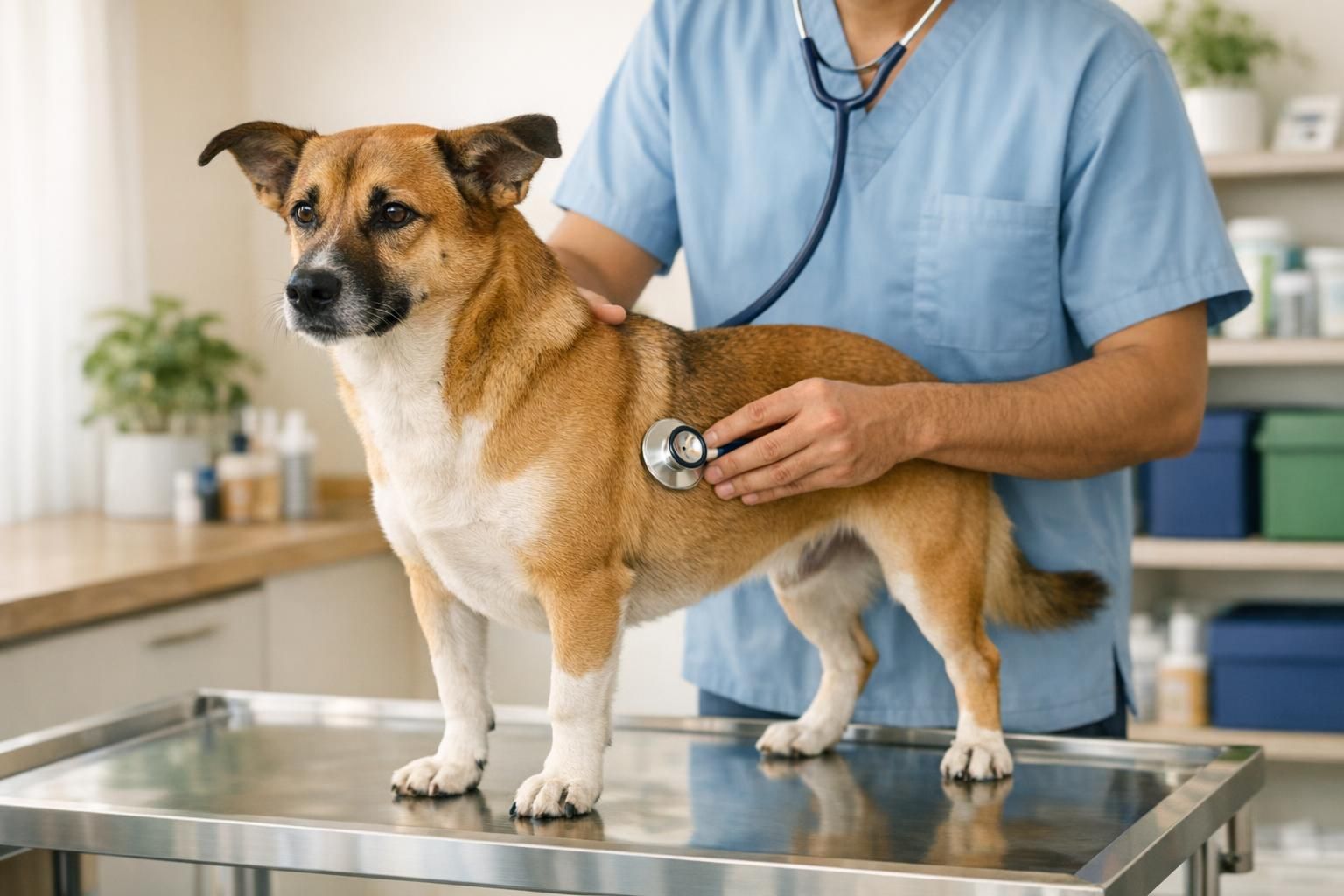
The 24-hour home care window is for mild cases in adult, otherwise healthy dogs. It is not a rule for every dog.
Go to the vet the same day if any of these are true. Blood in the stool. Black or tarry stool. Vomiting more than once or twice. Not drinking water. Extreme lethargy. A hard or painful belly. A puppy under 4 months. A senior dog. A dog with any existing condition like kidney disease, diabetes, or a recent surgery.
Some causes of loose motions in dogs are vaccine-preventable, like parvovirus, and while many mild tummy upsets are self-limiting, parvo and similar infections are absolutely not. Even when a condition is technically self-limiting, recovery can still be stressful for your dog and hard on you. Keep vaccinations current, and when in doubt, get a stool test done rather than guessing at home.
Why gut support matters after the episode
Here is the part most articles skip. The loose motion itself is the visible bit. What happens inside the gut afterwards matters too.
A 2019 Journal of Veterinary Internal Medicine systematic review of probiotics for gastrointestinal disease in dogs found the evidence is still limited: in the studies so far, probiotics made only a very small, possibly unimportant difference to sudden tummy upsets, and for long-running gut problems they added no clear benefit over the right diet. So a probiotic is not a treatment for the episode itself. That part is your vet's job.
For broader context on nutrition for Indian dogs, the WSAVA Global Nutrition Guidelines are the standard reference vets use worldwide.
One honest limit here. Recurring loose stools are usually not a one-week fix. They need your vet to find the cause, and ongoing gut care is closer to long-term maintenance, with a few dogs needing it as part of their daily routine for life.
What a daily probiotic actually does
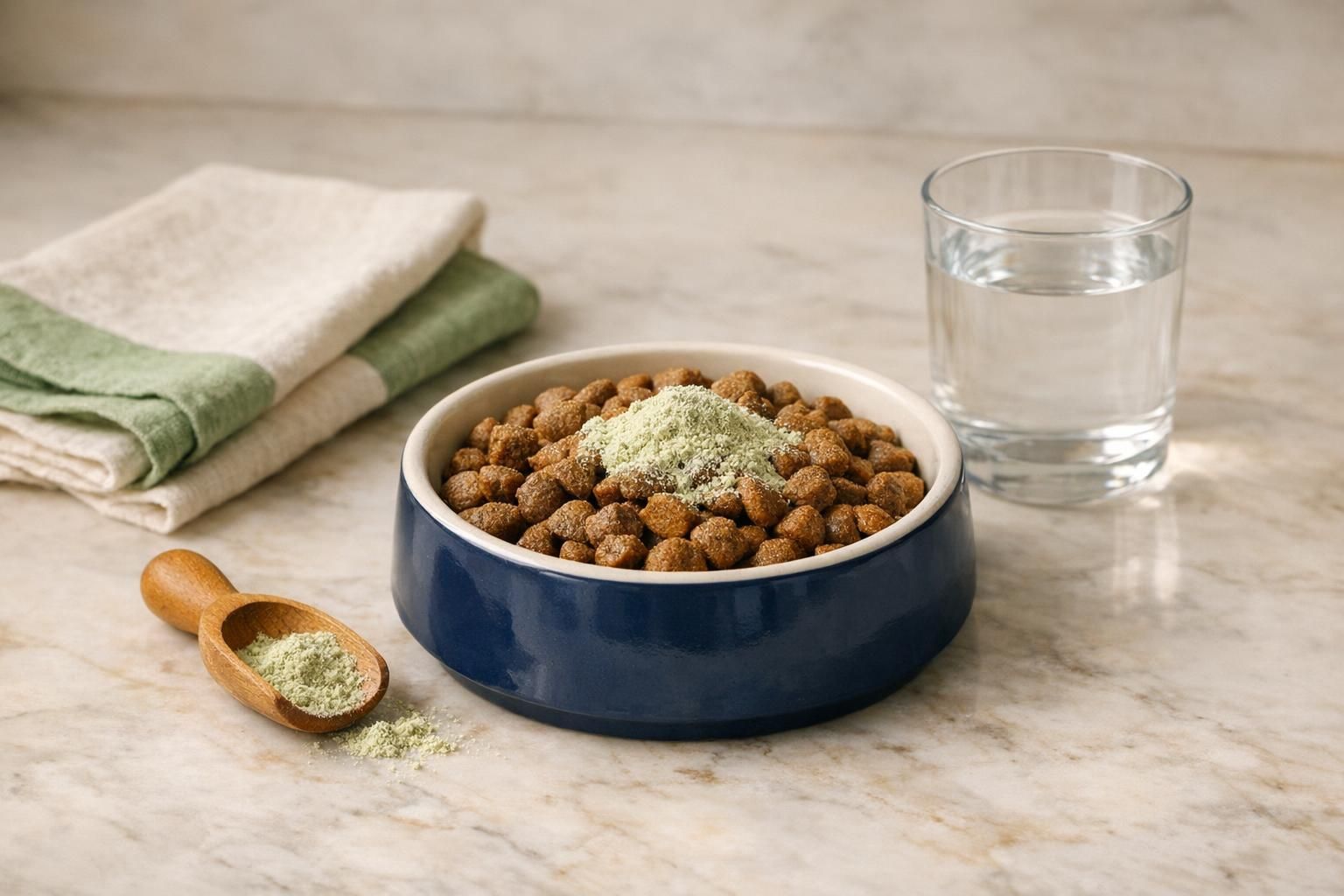
K9 Vitality Pre+Probiotics is a powder that mixes into food. It brings 12 live bacterial strains plus prebiotic fibres, the food those good bacteria feed on. Prebiotics are simply the fibre part that keeps the good bacteria in your dog's gut alive and active. Together they help support gut balance after episodes of loose motion, antibiotic courses, or food changes.
It is not a rescue medicine. Do not start it during active vomiting or the worst hours of diarrhea, wait until your dog is 24 to 48 hours symptom-free, then begin. Think of it as the follow-up to the vet's care, not a replacement for it. You can read the full formulation on the K9 Vitality Pre+Probiotics page, and if your dog also deals with itchy skin alongside gut trouble, the Skin & Coat supplement can be given alongside it, since gut and skin trouble can be linked in some dogs.
"Rana, nearly 5 year golden retriever has been using the K9, Prebiotic supplement for a year now. There has been an improvement in his gut health and immunity! He is more active and does not fall sick often nowadays. Highly recommended for daily usage"
— Preetha, Golden Retriever parent, verified customer via Judge.me
Timelines vary for every dog. The honest answer is that you have to give it real time.
Dosage by weight
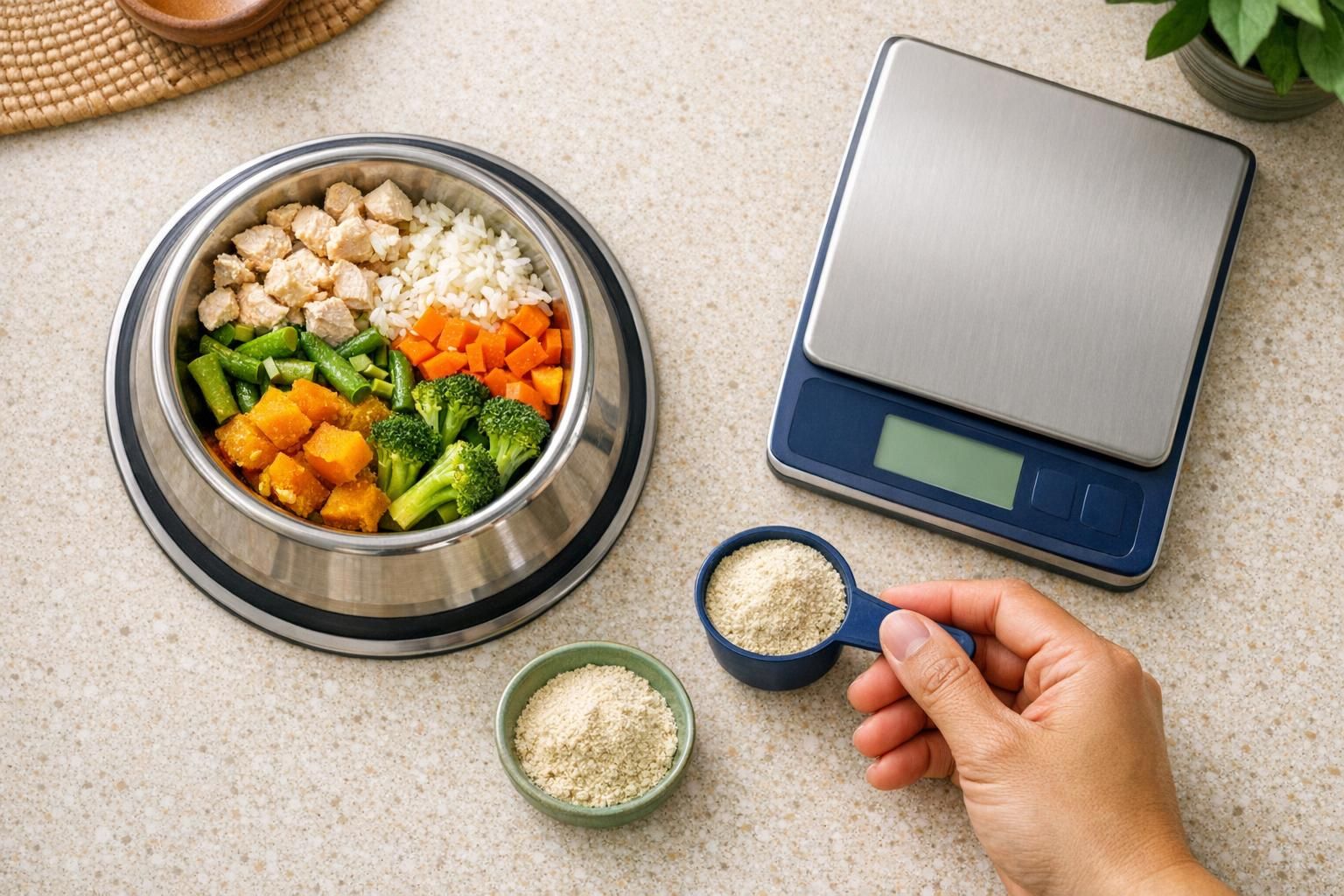
Dosage by weight
| Dog's Weight | Daily Amount |
|---|---|
| Below 11 kg | Less than half a scoop |
| 11 to 26 kg | 1 scoop |
| 27 to 45 kg | 2 scoops |
| 46 kg and above | 3 scoops |
Mix into food daily. Start with half the recommended amount for the first week, then move to the full dose. Suitable for dogs 4 months and older. Backed by our 90-day money-back guarantee. Free shipping on prepaid orders, and Cash on Delivery is available with a ₹100 COD fee.
When to See Your Vet
- Blood in the stool, or black tarry poop
- Vomiting along with loose motions, especially more than twice
- Continuous diarrhea beyond 24 hours in an adult, or any loose stool in a puppy under 4 months
- Weakness, wobbliness, or collapse
- Pale gums, dry gums, or a skin pinch that does not spring back
- A hard, tense, or painful belly
- Suspected poisoning, or if your dog ate something unusual before the loose motions started
- Loose motions in a dog on medication, or with kidney, liver, or diabetic history
Your vet can run a stool test to check for parasites, infections, and other issues. Do not try to guess these at home.
Key takeaways
- Mild loose motions in a bright, drinking, adult dog can be managed at home for 24 hours.
- Feed plain boiled white rice with a small amount of boiled boneless chicken. No dahi, no haldi, no oil.
- See a vet the same day for blood, vomiting, weakness, puppies, or seniors.
- A daily probiotic supports steadier stools long-term, not an emergency fix.
- Recurring loose stools need a vet check and ongoing care, not a one-week course.
Sources: Journal of Veterinary Internal Medicine 2019, systematic review of probiotics for gastrointestinal disease in dogs, PMID 31313372. WSAVA Global Nutrition Guidelines, wsava.org. All customer reviews are verified via Judge.me.
If your dog has loose motions tonight, do the boring, careful thing. A short food pause, water available, small bland meals, and eyes on him for red flags. If anything feels off, call the vet the same day, do not wait for morning. Once he is settled, a daily probiotic can support everyday gut balance. We also offer a 90-day money-back guarantee.
Start with the gut. Everything else follows.
Written by Aman Patial, Founder, K9 Vitality.
Dr. Jasleen Kaur, MVSc (Surgery & Radiology)
Dr. Jasleen Kaur is a veterinary surgeon and the founder of Allpets Clinic and Beyond, with over 10 years of experience in small animal and exotic pet care. She holds a Master’s in Surgery and Radiology, a diploma in Animal Welfare Law from NALSAR University, and an Executive MBA from ISB. Her work focuses on preventive healthcare, diagnostics, surgery, and overall pet wellness.
LinkedIn

